

Community Resources

UConn Extension One Health

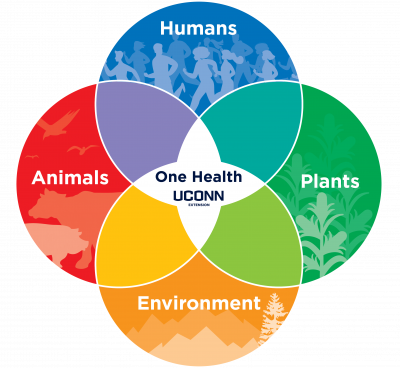
The University of Connecticut Cooperative Extension One Health Program promotes interdisciplinary collaboration to enhance community wellbeing. In applying the One Health framework, we can work to optimize the collective health of humans, animals, plants, and the environment. This program helps community members understand and co-create community-based solutions to modern One Health challenges, such as zoonotic and vector-borne disease concerns, food safety, pollinator health, and more.

What is One Health? | UConn Extension

Boy holding chicken in paddock.


Sara Tomis portrait

Sara Tomis

Assistant Extension Educator

One Health - Agriculture and Community Engagement

Contact

Emergency Preparedness

Extreme weather events are increasing in severity and frequency, posing significant risks to Connecticut communities and the agricultural production system. Damage to health and property can be reduced through preventative action such as planning and preparedness using the One Health framework. Learn more about steps you can take to prepare for extreme weather:

      UConn Extension One Health graphic, featuring human, animal, plant, and environmental health.

      4-H Youth Education Materials

      Crest shaped logo displaying text: B.E. S.A.F.E. BIOSECURITY EDUCATION TO SAFEGUARD ANIMALS AT FAIRS AND EVENTS

      UConn Extension BE SAFE: Biosecurity Education to Safeguard Animals at Fairs and Events

      The BE SAFE program aims to increase awareness, preparedness, and implementation of biosecurity measures among youth exhibitors, volunteers, fair organizers, and the general public. Through educational outreach and practical tools, we’re building a culture of health and safety in animal event settings across the Northeast.

      4-H clover

      Michigan State University's Health for One, One Health for All activity explains the topics of One Health in addition to providing directions for a hands-on activity.